Mexico City Metro for First-Timers: Fares, Hours and Women-Only Cars
A ride on the Mexico City Metro costs $5.00 MXN, paid with a contactless bank card or an MI card. Here are the hours, lines and women-only cars.
The Mexico City Metro charges a flat $5.00 MXN per trip, no matter how far you go or how many times you transfer. You can pay at the turnstile with a contactless credit or debit card, a phone or smartwatch wallet, or an Integrated Mobility Card (MI). The system runs every day of the year, and on most trains the first three cars are reserved for women and children under 12.
The details below come from the city’s official visitor page, Mexico City’s tourism site. Fares, hours and rules can change, so confirm them at the station or on the official page.
How big is the Metro, and how do you tell the lines apart?
The Collective Transport System (STC) Metro opened on Sept. 4, 1969. It now has 12 lines, 195 stations and more than 226 kilometers of track, which the city describes as the largest metropolitan rail network in Latin America. The station pictograms were originally designed by Lance Wyman.
Lines 1 through 9 and Line 12 are named by number and color. The two lines that reach into the State of Mexico use letters: Line A (purple) and Line B (green and gray). Directions are given by the name of the terminal station at the end of each route, so check which end you are heading toward before you board. Platforms and hallways have maps of the network and the surrounding neighborhood.
Which lines will most visitors use?
- Line 1 (pink), Pantitlán to Observatorio: the oldest line, opened in 1969.
- Line 2 (blue), Cuatro Caminos to Taxqueña: opened in 1970 and crosses the Zócalo and Bellas Artes.
- Line 3 (olive green), Indios Verdes to Universidad: runs north to south and serves Coyoacán and Ciudad Universitaria.
- Line 5 (yellow), Politécnico to Pantitlán: connects directly with Terminal 1 of Benito Juárez International Airport.
- Line 6 (red), El Rosario to Martín Carrera: the main route to the Basilica of Guadalupe, at La Villa-Basílica station.
- Line 7 (orange), El Rosario to Barranca del Muerto: the deepest line, and the one for Polanco, the Bosque de Chapultepec and the National Auditorium.
- Line 8 (green), Garibaldi/Lagunilla to Constitución de 1917: links the mariachi and market area of the center with Iztapalapa and connects to Cablebús Line 2.
Line 4 is the first line built almost entirely above ground, with views over the east of the city. Line 12 (golden), from Mixcoac to Tláhuac, opened in 2012 and is the youngest. If Garibaldi is on your list, our guide to Plaza Garibaldi and its mariachi square covers the stop.
How much is the fare and how do you pay?
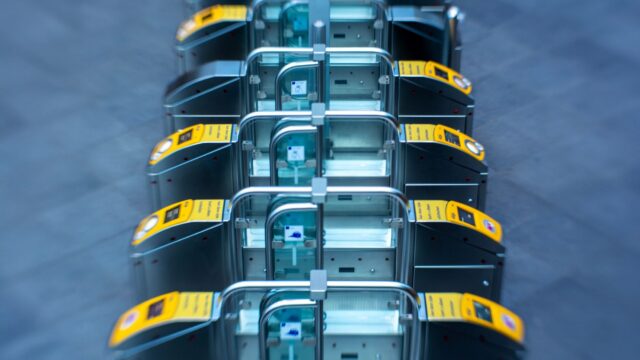
The fare is $5.00 MXN per trip. The paper magnetic ticket was retired on March 1, 2024, so access is now digital. Besides the MI card, the city says you can tap a contactless bank card or a phone or smartwatch wallet such as Apple Pay or Google Wallet at the turnstile.
You enter by presenting the card or phone at the turnstile. A separate Spanish-language section of the same page says tickets and cards are not needed to leave the system.
Where do you buy an MI card?
The English page says the card costs $15.00 MXN and is sold at ticket booths in any Metro station and at automatic machines in Metrobús, Cablebús and Light Rail stations. A Spanish passage on the same page gives a price of 10 pesos, so figures differ; ask at the booth. The machines take cash and bank cards for buying a card or adding money. The maximum balance is $500.00 MXN.
The Spanish text adds that booths often run out of cards and that the machines at Metrobús stations are usually more convenient. The same card also works on the Metrobús.
What are the Metro hours?
The Metro operates 365 days a year. The Spanish section of the official page lists these hours:
- Monday to Friday: 5:00 to 24:00
- Saturday: 6:00 to 24:00
- Sunday and holidays: 7:00 to 24:00
Schedules shift on special dates, such as the holiday opening time on Nov. 16.
When is the Metro busiest?
The English page gives the rush hours as 7:00 to 10:00 and 17:00 to 21:00. The Spanish text gives narrower windows: 7:30 to 9:30 in the morning and 17:30 to 20:00 in the evening. Trains can run late during these periods and when it rains, because of high demand and driving safety protocols. The page recommends leaving extra time for transfers.
What should you know about the women-only cars?
The first three cars of most trains are reserved for women and children under 12 throughout operating hours. The city says the measure is meant to make the trip more comfortable and safe for these passengers. Access to these cars is marked on the platforms. For more on security, see our report on Metro robbery figures.
Quick answers
Is there one price for every trip?
Yes. The fare is $5.00 MXN regardless of distance or transfers.
Can I pay with my phone?
Yes. The official page says contactless cards and phone or smartwatch wallets work at the turnstiles.
Which line goes to the airport?
Line 5 (yellow) connects directly with Terminal 1 of Benito Juárez International Airport.
Which line goes to the Basilica of Guadalupe?
Line 6 (red), to La Villa-Basílica station.
Checked against official sources in November 2026. Hours, prices and rules change: confirm on the official page before you go or apply.