Christmas in Mexico City: Posadas, Markets, Reyes and Rosca
The holiday season here is longer than in the US and ends with a sweet bread and a debt of tamales. A calendar of what happens when, and what is still unconfirmed for 2026.
Christmas in Mexico City is a season, not a day: nine nights of posadas from December 16 to 24, Christmas Eve dinner (Nochebuena) on the 24th, and Día de Reyes with its rosca bread on January 6. Only December 25 and January 1 are official rest days. As of November 5, 2026, the city had not announced its Zócalo program for this season.
When does the Christmas season start and end?
The festive calendar runs from mid-December to early February. Mexico’s Ministry of Culture describes the cycle as the posadas and the nativity scene from December 16 to 24, then Christmas, then the Three Kings on January 6, closing with Candlemas (Día de la Candelaria) on February 2. In Mexico City the run-up starts even earlier, with the pilgrimage to the Basílica for December 12, the feast of the Virgin of Guadalupe.
| Date | Occasion | Day off by law? |
|---|---|---|
| December 12 | Virgin of Guadalupe | No (banks close) |
| December 16 to 24 | Posadas | No |
| December 24 | Nochebuena (Christmas Eve) | No |
| December 25 | Christmas Day | Yes |
| December 28 | Día de los Santos Inocentes, the local April Fools’ Day | No |
| January 1 | New Year’s Day | Yes |
| January 6 | Día de Reyes (Epiphany) | No |
| February 2 | Día de la Candelaria | No |
The legal rest days come from Article 74 of the Federal Labor Law; our page on Mexico’s public holidays lists all seven. In 2026, December 25 is a Friday and January 1, 2027 is also a Friday, which gives two long weekends.
What happens at a posada?
A posada is a party that re-enacts Mary and Joseph’s search for lodging in Bethlehem. The Ministry of Culture notes there are nine of them, one for each month of pregnancy. A traditional posada starts with guests split into two groups, one outside the door and one inside, singing alternate verses of the song that asks for shelter (pedir posada) while holding candles. The door opens, and the party begins.
The usual elements are a piñata for the children and often the adults, hot fruit punch (ponche) made with guava, tejocote and sugar cane, tamales and small bags of candy and fruit called aguinaldos. Not every posada is religious. Offices, schools and building neighbors hold their own, often on a single evening in mid-December, and many are simply year-end parties with a piñata.
The office posada usually lands around the time the legal Christmas bonus is paid. Our guide to the aguinaldo, Mexico’s Christmas bonus, explains the December 20 deadline.
What are pastorelas?
Pastorelas are comic nativity plays in which shepherds travel to Bethlehem while devils try to stop them, with an angel or a hermit stepping in. The form dates back to colonial-era evangelization and is now mostly satire: scripts mix the story with jokes about politics, traffic and current events. Theaters, cultural centers, parishes and schools stage them in December. Shows by professional companies are usually ticketed, while parish and school versions are often free. Most are in fast, slang-heavy Spanish.
Where do people buy trees, piñatas and decorations?
Seasonal street markets called romerías navideñas set up next to several public markets from late November or early December until Christmas Eve, selling natural trees, lights, nativity figures, moss, poinsettias and piñatas. Two of the best known stand beside the Mercado de Jamaica, the city’s big flower market, and around the Mercado de Sonora, both in the Venustiano Carranza borough. Exact dates and locations are set each year with the borough, so check the borough’s announcements before going.
- Poinsettias: the flower called nochebuena in Mexico is native to the country and is sold everywhere in December, from markets to supermarkets.
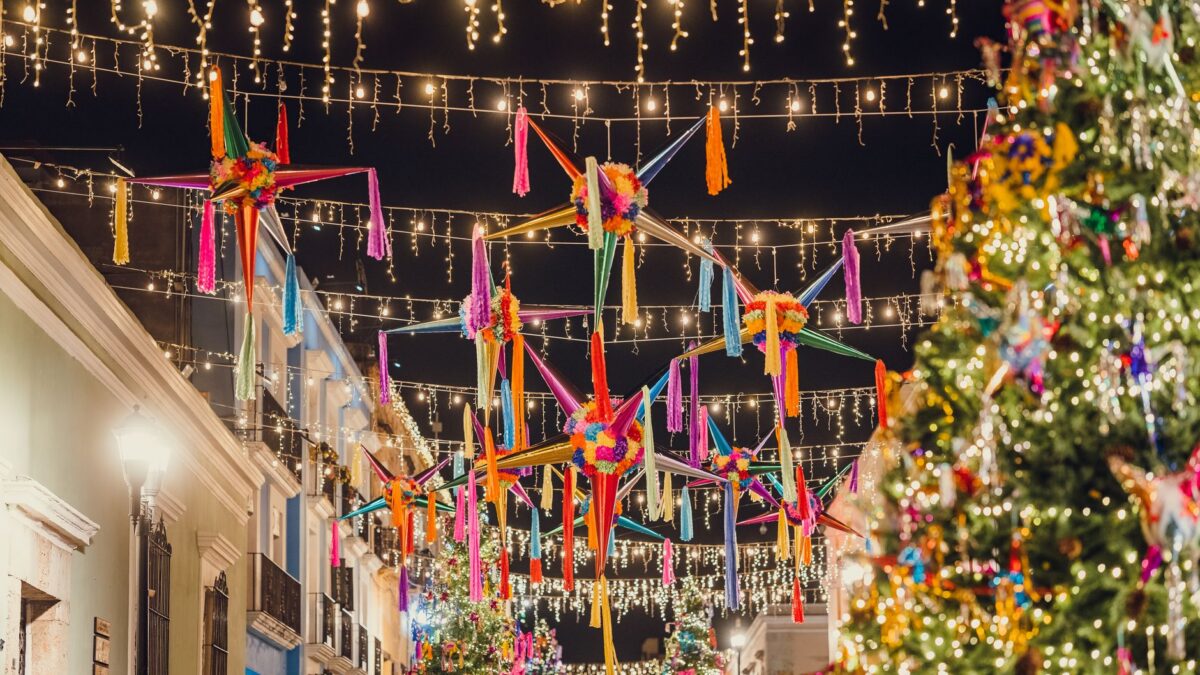
- Piñatas: the classic star with seven points is still common, alongside cartoon characters. Markets in the Centro and La Merced area sell them with candy by the kilo.
- Trees: natural trees are sold by the meter at romerías and garden centers; artificial trees and lights are in every department store.
What is on in the Zócalo?
The city has not announced its 2026 Zócalo program as of early November. Last season, Mayor Clara Brugada switched on the Christmas lights in the Zócalo on December 16, 2025, and the Christmas fair (verbena navideña) ran from December 20, 2025 to January 4, 2026, with more than 600 cultural and tourist activities announced across that period. The ice rink that used to fill the Zócalo did not return for 2025, according to press reports, and recent seasons have spread rinks and Christmas villages to the boroughs instead.
Expect the main square and Avenida 20 de Noviembre to be busy on December evenings, and plan around closures. Our page on road closures and marches explains how to check them on the day.
How are Nochebuena and Día de Reyes celebrated?
Nochebuena is the main family meal, eaten late on December 24, often after a midnight mass (misa de gallo). Common dishes in central Mexico include turkey, bacalao (salt cod stewed with tomatoes, olives and peppers), romeritos with mole and shrimp patties, and ponche. December 25 is a quiet day of leftovers.
On the night of January 5, children leave a letter or a shoe for the Three Kings, who bring presents by the morning of the 6th. That day, families and offices cut a rosca de reyes, a ring-shaped sweet bread topped with candied fruit. Small plastic figures of the baby Jesus are hidden inside. According to INAH, the National Institute of Anthropology and History, whoever finds one becomes the godparent of the figure and is expected to host the tamales on February 2. Many people cut a thin slice and hope.
What closes over the holidays?
December 25 and January 1 are the only days most businesses must close or pay double, though shops, restaurants and transport keep running on reduced hours. Banks also close on December 12. Government offices often take a winter break in late December and early January, so finish paperwork with INM, SAT or the city before mid-December or check each office’s announced calendar.
Bottom line
If you are invited to a posada, bring something for the table and expect to stay late. Book anything bureaucratic before December 15, keep an eye on the city government’s channels for the 2026 Zócalo announcement, and buy your rosca early on January 6, when bakeries have lines.
FAQ
Is December 24 a holiday in Mexico?
No. Christmas Eve is not a legal rest day, although many employers give the afternoon off. December 25 is the official holiday.
Will there be an ice rink in the Zócalo in 2026?
Nothing has been announced as of November 5, 2026. The rink did not return to the Zócalo in 2025, so check the city government’s announcements in December.
What does it mean to get the figure in the rosca?
The person who finds the figure of the baby Jesus is expected to provide tamales and atole on February 2, Día de la Candelaria. It is a social custom, not an obligation.
Do Mexicans exchange gifts on Christmas or on January 6?
Both. Many families now give presents on Christmas Eve or Christmas morning, and children still receive gifts from the Three Kings on January 6.