Pensions Take 73% of ISSSTE Budget as IMSS Limits Modalidad 40
Pensions absorb 73% of the ISSSTE budget and 64% of the IMSS budget in 2026. IMSS has also capped the salary new Modalidad 40 entrants can choose.

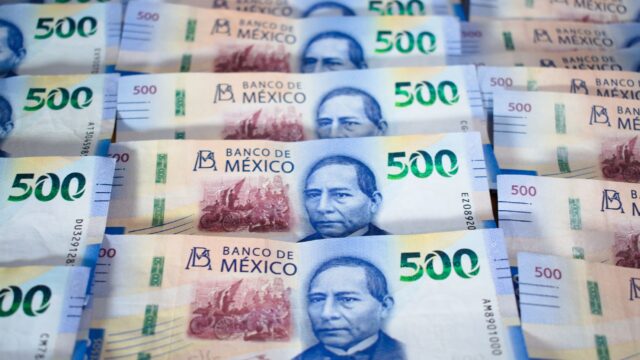
Pensions and retirement payments absorb 73% of the 2026 budget of ISSSTE (the social security institute for government workers) and 64% of the budget of IMSS (Mexico’s social security institute). The figures come from the federal spending budget for 2026 and were cited by Gabriela Luna, an economist at the Universidad Iberoamericana, Publimetro México reported.
Her warning follows a rule change that already affects people planning their retirement. Since late October, new entrants to Modalidad 40, an IMSS scheme that workers have used to raise their future pension, can no longer pick a high contribution salary.
What changed in Modalidad 40
IMSS changed the conditions for joining the scheme through an agreement published in the Diario Oficial de la Federación (the federal government’s official gazette) on Oct. 21. It took effect the following day and is described as a temporary measure.
Anyone who applies to join or rejoin Modalidad 40 can now contribute based on the last base salary IMSS has on record for them, or on that amount plus one Unidad de Medida y Actualización (UMA, the reference unit the rule uses). The figure cannot be lower than the general minimum wage that applies to them.
Before the change, participants could choose a much higher contribution salary, up to the legal ceiling of 25 UMA. Under certain conditions, that choice made it easier to increase the eventual pension.
Who keeps the old terms
People who were enrolled before the change keep the conditions of the period they contracted. IMSS will also recognize the weeks and salaries they have already contributed and paid for.
New enrollments have to be processed through digital channels, and the rule does not apply retroactively.
How much Mexico spends on pensions in 2026
Luna put budgeted spending on pensions and retirement at roughly 1.704 trillion pesos for 2026, close to 24% of federal programmable spending. She said that makes it hard to pay pension obligations and, in the same budget, fund medical care, hospital infrastructure and the supply of medicines. For readers new to the system, there is a guide to how IMSS and ISSSTE fit into public health care.
The population is aging. The Consejo Nacional de Población (Conapo, the national population council) estimated that Mexico had 17.1 million people aged 60 and over in 2025. A 2025 survey by INEGI (the national statistics agency) counted 19.2 million, or 14.7% of the population.
Why it matters for workers and retirees
Older Mexicans also need more continuous medical care. In the 2024 national survey on health and aging, known as ENASEM, 41.5% of people over 50 reported high blood pressure and 25.5% reported diabetes.
Luna said the aging is happening alongside informal work, inequality and chronic illness. Millions of Mexicans have worked informally without building up enough contributions to qualify for a contributory pension, which is one paid on the basis of what a worker put in.
For someone close to retirement and outside the scheme, the practical effect of the October rule is a lower ceiling: the contribution salary is now anchored to the last registered wage, and the 25 UMA option is closed to new applicants for as long as the temporary measure lasts.
What the economist proposes
Luna called for a review of the pension regimes, stronger preventive medicine and more geriatric and care services, while respecting rights workers have already acquired. Any reform, she said, should separate legitimate contributions from possible abuses and from structural inequalities.
She said institutions will need enough resources to pay sustainable pensions and provide medical care as people live longer.
Source: Publimetro México