Cholula Day Trip From Mexico City: The Great Pyramid and Town
The Great Pyramid of Cholula, near Puebla, is the largest pyramid by volume in the world. Here is what to see and what to check first.
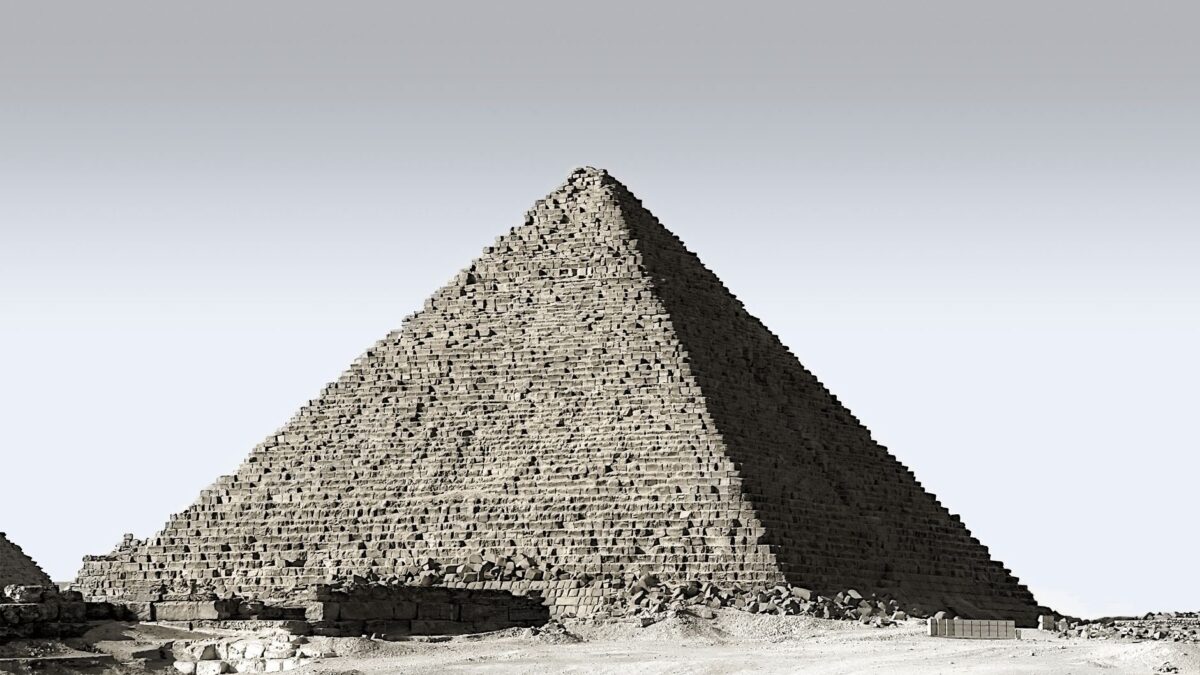
Cholula, in the state of Puebla, has the Great Pyramid of Cholula (Tlachihualtepetl), the largest pyramid in the world by volume. From above it looks like a grassy hill with a church on top, so most of what visitors see is the town, the hilltop sanctuary and the tunnels under the mound. This guide covers what the site is, what to look at and what to confirm before you travel from Mexico City.
The pyramid is described by Wikipedia’s entry on the Great Pyramid of Cholula, and the surrounding state by its entry on Puebla. Neither page gives opening hours, ticket prices or transport details, so those are left for you to check.
What is the Great Pyramid of Cholula?
Tlachihualtepetl is Nahuatl for “constructed mountain.” The temple complex sits in the city of Cholula, in the San Andrés Cholula municipality, 6.4 kilometers west of the city of Puebla. The Instituto Nacional de Antropología e Historia (INAH, Mexico’s national institute of anthropology and history) is the responsible body.
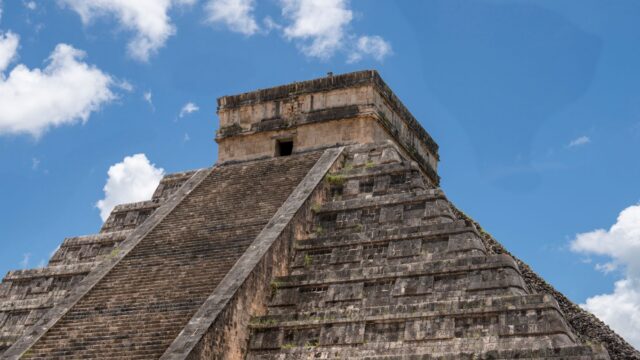
The pyramid is built of adobe brick. It rises 25 meters above the surrounding plain, far lower than the Great Pyramid of Giza at 146.6 meters, but much wider: 300 by 315 meters at its final base, against 230.3 by 230.3 meters at Giza. Citing the Guinness Book of Records, the source gives its volume as over 4.45 million cubic meters, compared with about 2.5 million for Giza.
What is the history of the site?
Construction began around the 3rd century BC. Over roughly a thousand years before the Spanish invasion, successive building phases enlarged the mound. The source describes four stages running to the 9th century AD, and elsewhere six superimposed structures, one for each ethnic group that dominated the site, of which only three have been studied in depth.
Residents abandoned the pyramid in the 8th century as the city lost much of its population, yet the structure kept its religious importance. At its peak Cholula had an estimated 100,000 people. Even after the pyramid was left, locals went on burying their dead around it.
The name Cholula comes from the Nahuatl Cholollan, “place of refuge.” In the 12th century the Toltec-Chichimecas took over the city and founded a new temple to Quetzalcoatl where the San Gabriel monastery now stands. The Olmeca-Xicallanca kept the pyramid as their main religious center.
What can you see at the pyramid?
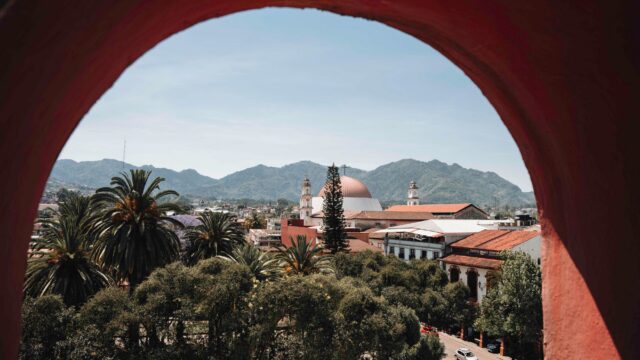
The hill is crowned by the Iglesia de Nuestra Señora de los Remedios (Church of Our Lady of Remedies), also called the Santuario de la Virgen de los Remedios. The Spanish built it in 1594 on top of the temple. It is a major pilgrimage destination, and the site also hosts native rites.
Because the church is a designated monument, the pyramid has not been fully excavated and restored, unlike the smaller but better-known pyramids at Teotihuacan. Archaeologists did dig tunnels inside. Architect Ignacio Marquina began exploratory tunneling in 1931, and by 1954 the total length came to about 8 kilometers. Whether and how visitors can enter the tunnels is not stated in the sources, so ask at the site or check with INAH.
The wider archaeological zone is estimated at 154 hectares, and the pyramid is only part of it. The earliest construction phase uses talud-tablero architecture, a style linked to Teotihuacan, with some influence from the Gulf Coast.
If you like pyramids, the site pairs naturally with the options in our guide to archaeological day trips from Mexico City.
What else is there in Cholula and Puebla?
Puebla city was founded by the Spanish in 1531 to protect the trade route between Mexico City and the port of Veracruz. The state is known for mole poblano and the china poblana costume, and for festivals such as Day of the Dead and Carnival.
The state also has big volcanoes on its borders, including Popocatépetl at 5,452 meters and Iztaccíhuatl at 5,286 meters above sea level. On a clear day they can frame the view from the hill, though the sources do not say so directly.
How do you plan the trip from Mexico City?
The sources give no routes, bus companies, fares or travel times, so confirm them with the operator before you go. Our overview of day trips from Mexico City by bus lists Puebla among the destinations, and the Tepoztlán day trip is a useful comparison if you are choosing between pyramid towns.
- Check the current hours and ticket price for the archaeological zone with INAH.
- Find out whether the tunnels are open to visitors on the day you plan to go.
- Plan for rain if you travel between May and October, the rainy season in Puebla, according to the state’s climate description.
- Allow time for the church on the summit and for the town around the pyramid.
Quick answers
Is the Great Pyramid of Cholula taller than Giza?
No. It is 25 meters high against 146.6 meters for the Great Pyramid of Giza. It is larger by volume and has the larger base.
Why does it look like a hill?
The pyramid was overgrown by the time the Spanish arrived, and the church built in 1594 stands on top. It has not been excavated and restored as a whole.
What does Cholula mean?
Cholula comes from the Nahuatl Cholollan, meaning “place of refuge.” One source reading also gives “the place of those who fled.”
Checked against official sources in November 2026. Hours, prices and rules change: confirm on the official page before you go or apply.