Things to Do in Centro Histórico Mexico City: 9 Landmarks
Things to do in Centro Histórico Mexico City: nine landmarks from the Zócalo to Bellas Artes, with what to see, one set of hours and tips.
Centro Histórico, Mexico City’s historic center, has its main landmarks close together around two walking routes that the city calls “Heart of Mexico”: one from the Zócalo to the Templo Mayor, the other from the Alameda Central along Madero street. This guide lists nine sites in visiting order, starting with the main square, its cathedral and the National Palace, and ending with the tiled Casa de los Azulejos and the Palacio Iturbide.
Zócalo
The Zócalo, officially the Plaza de la Constitución, is the central square of the city and is often described as the central square of the whole country. It stands on the center of ancient Tenochtitlan, and the Spanish kept it as the political and religious center after they took the city. Mexico City’s official visitor site gives two origins for the name: the Constitution of Cádiz of 1812, and the base of a column planned in the middle of the 19th century to mark independence, of which only the base was ever built.
The Metropolitan Cathedral closes the north side and the National Palace the east side. The Antiguo Palacio del Ayuntamiento (the old city hall, still the seat of city government) takes the south side. Private buildings on the west side include restaurants and terraces with views over the center. The square hosts fairs, concerts and parades through the year, and a public skating rink has been set up every winter since 2007. Photographer Spencer Tunick photographed 18,000 people here, and Café Tacuba drew 100,000 fans to a concert.
Location: the central square of Centro Histórico, first stop of the Zócalo to Templo Mayor route.
Metropolitan Cathedral
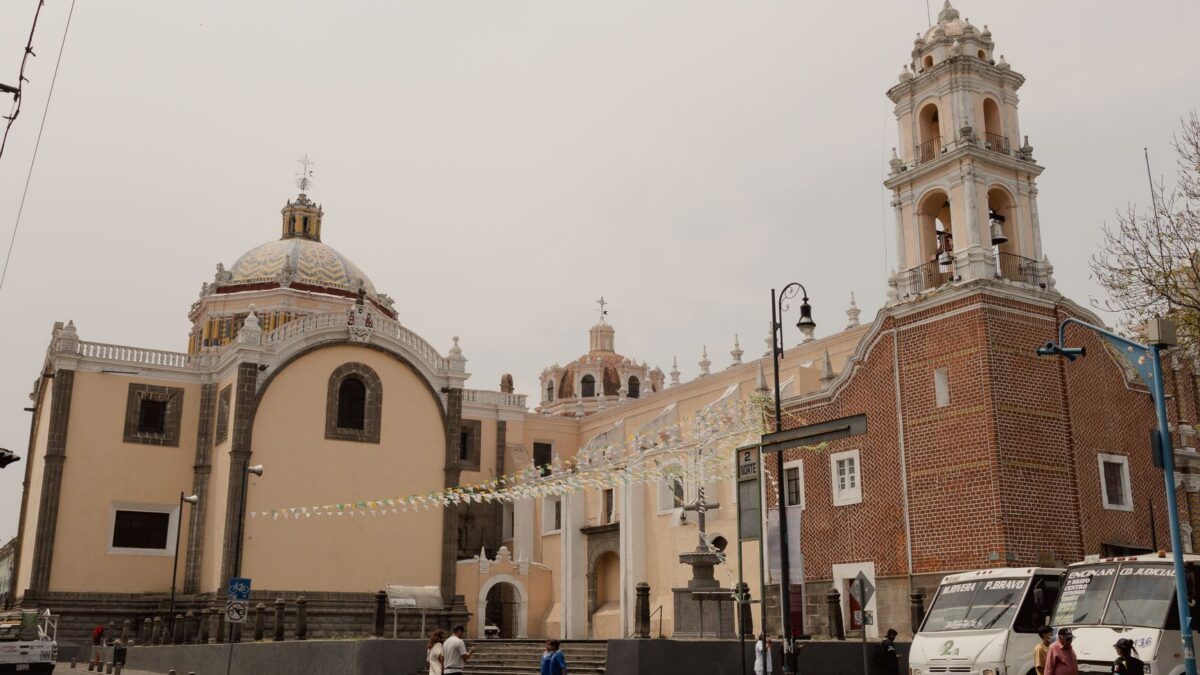
The Catedral Metropolitana, dedicated to the Assumption of Mary, stands on the north side of the Zócalo, on top of the former Aztec sacred precinct near the Templo Mayor. According to its Wikipedia entry, it was built in sections from 1573 to 1813, which explains the mix of Gothic, Baroque and Neoclassical elements. The building is 128 metres long and 67 metres high to the tips of its towers.
Inside are five naves, two bell towers with 25 bells, and sixteen chapels, fourteen of them open to the public. Each chapel is dedicated to a saint or saints and was sponsored by a guild. The cathedral also has two of the largest 18th-century organs in the Americas and a crypt holding the remains of former archbishops. The soft clay soil beneath it put it on the World Monuments Fund list of the 100 Most Endangered Sites, and restoration work that began in the 1990s stabilized it and removed it from the list in 2000. A fire in 1967 damaged much of the interior.
Location: north side of the Zócalo.
Palacio Nacional
The Palacio Nacional is the seat of the federal executive and, since 2018, the official residence of the president. Its red tezontle façade fills the east side of the Zócalo and runs over 200 metres, according to its Wikipedia entry.
The main reason to go inside is the set of Diego Rivera murals around the main stairwell and the second-floor walls, painted between 1929 and 1935 and titled “The Epic of the Mexican People.” The stairwell mural covers 450 m2 and traces the history of Mexico from 1521 to 1930. Above the central doorway is the balcony where the president gives the Grito de Dolores just before 11 p.m. on Sept. 15, beside the bell Miguel Hidalgo rang to call for rebellion against Spain. Benito Juárez lived at the end of his term in a room in the former Finance Ministry patio and died there on July 18, 1872. His bedroom, living room and study are preserved.
The palace has fourteen courtyards, but only a few are open to the public. The southern door leads to the presidential offices, which have no public access.
Location: east side of the Zócalo.
Templo Mayor
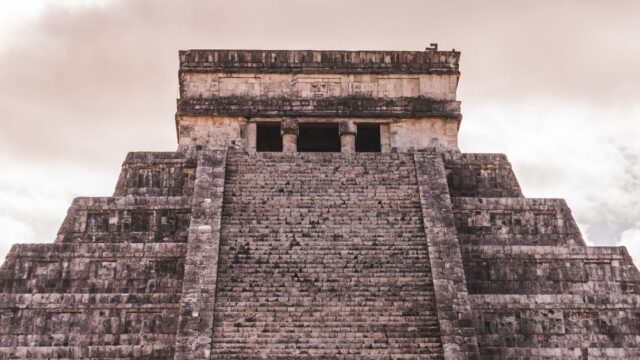
The Templo Mayor was the most important temple of Mexico-Tenochtitlan and the center of Mexica political and religious life. The temple had four pyramids and ended in two shrines, one for Tláloc (water) and one for Huitzilopochtli (war). It was dismantled after the war of 1519 to 1521, and homes were later built over the ruins. Manuel Gamio excavated part of it early in the 20th century, and more remains found in 1978 led to the recovery of the temple, the House of the Eagles and nearby buildings.
According to the city’s Templo Mayor page, the site museum, designed by architect Pedro Ramírez Vázquez, shows more than 3,000 artifacts, including offerings, burials, construction stages and colonial-era objects. The best known pieces are the monoliths of the goddesses Coyolxauhqui and Tlaltecuhtli. The museum focuses on Mexico-Tenochtitlan, while the Museum of Anthropology covers all the cultures of Mexico.
Location: the archaeological zone lies north and east of the Metropolitan Cathedral.
Alameda Central
The Alameda Central, established in 1592, is described on its Wikipedia entry as the oldest public park in the Americas. The name comes from álamo, the Spanish word for poplar. The park has paved paths, statues and five fountains of French design, and its paths form a starburst around a central kiosk. On the south side stands the Hemiciclo a Juárez, a white semicircular monument to Benito Juárez. A monument to Beethoven donated by the German community is also in the park.
A rehabilitation ran from May to December 2012, replacing the pavement with marble, adding trees and new lamp posts, and restoring benches and fountains. Street vendors are no longer allowed inside.
Location: between Avenida Juárez and Avenida Hidalgo, next to the Palacio de Bellas Artes. Getting there: Metro Bellas Artes.
Palacio de Bellas Artes
The Palacio de Bellas Artes is the headquarters of the Instituto Nacional de Bellas Artes y Literatura (INBAL, the national institute for fine arts and literature) and the home of the National Symphony Orchestra, the National Opera Company and the Ballet Folklórico de México, among other companies. The main hall seats some 1,700 guests, according to the city’s Bellas Artes page.
The exterior is mostly Art Nouveau, designed by Adamo Boari and begun in 1904, and the interior is mostly Art Deco, finished under Federico Mariscal. The building opened on Sept. 29, 1934. The stage has a crystal curtain made of nearly a million pieces of colored glass by Tiffany in New York, weighing some 24 tons and showing the Popocatépetl and Iztaccíhuatl volcanoes. Murals by Rufino Tamayo are on the first floor, and the second floor has works by José Clemente Orozco, David Alfaro Siqueiros, Diego Rivera, Jorge González Camarena, Roberto Montenegro and Manuel Rodríguez Lozano. The third floor houses the Museum of Architecture.
Location: the façade faces south to Avenida Juárez. Events: the full agenda is posted on the Bellas Artes website.
Torre Latinoamericana
The city’s visitor site calls the Torre Latinoamericana the most popular of the few viewing platforms in Mexico City. It was built from 1948 to 1956, has 44 floors and is known as the first skyscraper successfully built in a highly active seismic zone. Its page gives two heights, 166 meters and 182 meters. The building also holds the Museo del Bicentenario, the Miralto restaurant, exhibition space and a café, according to the city’s Torre Latinoamericana page.
Location: on the Alameda Central to Madero route, between the Palacio de Bellas Artes and the Atrio y Templo de San Francisco.
Casa de los Azulejos
The Casa de los Azulejos (House of Tiles) is an 18th-century Baroque palace whose façade is covered on three sides in blue and white Talavera tiles from Puebla. Wikipedia’s entry says the Countess of the Valle de Orizaba had the facade tiled in 1737. Later owners included the Sanborns brothers, and the house is now a Sanborns flagship restaurant.
Inside, the main courtyard has a fountain topped with mosaics and a stained glass roof added in the 20th century. The main stairway holds one of José Clemente Orozco’s earliest works, Omniscience, from 1925, and a peacock mural dates from 1919.
Address: Callejón de la Condesa, between 5 de Mayo and Madero streets.
Palacio Iturbide
The Palacio de Iturbide was built between 1779 and 1785 for the daughter of the Count of San Mateo Valparaíso, as a wedding gift, according to the city’s Iturbide Palace page. Agustín de Iturbide lived here from 1821 to 1823 and accepted the crown of the First Mexican Empire in the building. The same page also gives 1782 as the year of construction.
The façade is made of tezontle and cantera stone, and the courtyard is surrounded by eighteen arches on Tuscan columns. The building served as a hotel for more than 100 years, was bought by the National Bank of Mexico in 1965 and became the seat of the Banamex Cultural Foundation in 1972. It is now the Palacio de Cultura Banamex, which holds temporary exhibitions. A central gallery is closed to the public.
Hours: daily from 10 a.m. to 7 p.m.
Tips for visiting
- The first four sites sit around the Zócalo and belong to the Zócalo to Templo Mayor route. The last five, from the Alameda Central to the Palacio Iturbide, follow the Alameda to Madero route.
- Only the Palacio Iturbide has opening hours in the official pages used here. Confirm hours and ticket prices for the other sites with each venue before going.
- The National Palace has restricted areas, so check the current access rules with the official channels.
- The Zócalo is a frequent site of large events. The city’s police ministry publishes lists such as the marches and rallies planned for a single day, and the New Year’s Eve guide covers holiday events.
- For galleries beyond the center, see nine art museums compared.
Quick answers
Which landmarks surround the Zócalo?
The Metropolitan Cathedral is on the north, the National Palace on the east and the Antiguo Palacio del Ayuntamiento on the south. The west side has private buildings, including restaurants and terraces with views of the center.
Where can I see murals in Centro Histórico?
The National Palace has Diego Rivera’s murals in its main stairwell. The Palacio de Bellas Artes has works by Tamayo, Orozco, Siqueiros, Rivera and others. The Casa de los Azulejos has Orozco’s Omniscience on its main stairway.
What can I do at the Torre Latinoamericana?
The tower has a viewing platform, the Museo del Bicentenario, the Miralto restaurant, exhibition space and a café.
Checked against official sources in November 2026. Hours, prices and rules change: confirm on the official page before you go or apply.