Casa Luis Barragán Mexico City: History, Tours and Tips
Casa Luis Barragán is the architect's former home in Miguel Hidalgo, now a museum open for guided tours by appointment. Read its history and what to expect.
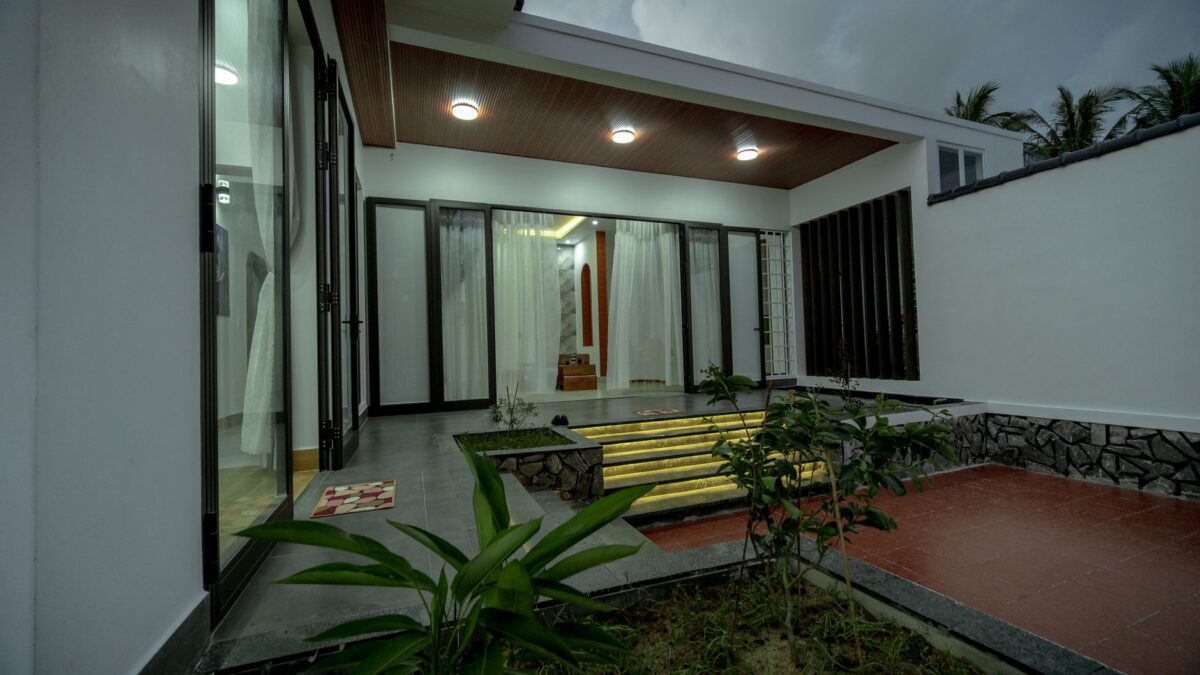
Casa Luis Barragán is the former home and studio of the Mexican architect Luis Barragán in the Miguel Hidalgo district of Mexico City. Today it is a museum, and it is visited by appointment through guided tours. UNESCO named it a World Heritage Site in 2004, and people go to see how one of Mexico’s best-known modern architects lived and worked.
The house sits in the west of the city and keeps its original furniture and Barragán’s personal objects. According to Wikipedia’s entry on the Luis Barragán House and Studio, the house itself is the main exhibit.
What is Casa Luis Barragán?
The house is a museum run by the state of Jalisco, Barragán’s home state, together with the Arquitectura Tapatía Luis Barragán Foundation (Fundación de Arquitectura Tapatía). The foundation and the Jalisco government own the property. Besides housing the permanent collection, the building is used by visiting architects, and it hosts conferences, book presentations and art exhibitions.
Its name in full is Luis Barragán House and Studio. The Constituyentes Metro station is listed as the public transit stop for the house.
How did the house come to be?
The land lay just outside the historic town of Tacubaya. Barragán probably bought the property in 1939, as part of a larger development, when his career was moving from real estate toward architecture. He later sold the rest of the land and kept the plot for himself.
Before this house, Barragán lived from 1943 to 1947 in the so-called Ortega House, which reused an existing building. The house was designed and built in 1947 for Luz Escandón de R. Valenzuela. In 1948, Barragán decided to move in himself, even though he was developing the elite Jardines del Pedregal subdivision in the south of the city at the time. Sources differ on the date: the page lists 1947 as the completion year, while the text also says it was built in 1948 after the Second World War.
Barragán lived in the house until his death in 1988. During those years it went through many changes and worked as a kind of laboratory for his ideas.
Who was Luis Barragán?
Luis Barragán Morfin was born in 1902 in Guadalajara into a wealthy family and grew up on a large ranch near the town of Mazamitla in Jalisco. He earned a civil engineering degree in 1925 and then spent two years in Europe, where he came into contact with the landscaping work of Ferdinand Bac.
After returning to Mexico he built houses in Guadalajara, and some of them were featured in publications in the United States and Italy. In 1936 he moved to Mexico City and worked in real estate development, including the area where his house stands. His projects reached Manzanillo, Guadalajara, Acapulco and La Jolla, California, and the page names Ciudad Satélite as his best-known work. His architecture was mostly limited to houses, and his skills were largely self-taught.
In 1976 the Museum of Modern Art in New York held an exhibition of his work, and he received the Premio Nacional de Ciencias y Artes. In 1980 he won the Pritzker Prize. He later developed Parkinson’s disease, which limited his ability to work.
Why did UNESCO list it?
The government of Jalisco and the Arquitectura Tapatía Luis Barragán Foundation acquired the house in 1993 and opened it as a museum in 1994. It was restored in 1995 at a cost of 250,000 pesos, with money from CONACULTA (the national culture council), the national lottery and the Jalisco government.
In 2004 UNESCO named the house a World Heritage Site. The page says it is the only private residence in Latin America with that status. It was chosen as a representative piece of 20th-century architecture that mixed traditional and vernacular elements with several philosophical and artistic currents of the mid 20th century. The page also lists it among the ten most important houses built in that century.
What is inside the museum?
The collection is mostly Mexican art from the 16th to the 20th century. It includes works by Picasso, Diego Rivera, José Clemente Orozco, Jesús Reyes Ferreira and Miguel Covarrubias. The Reyes Ferreira piece is an oil painting, one of the few oils the artist made. If Rivera’s work interests you, the guide to Diego Rivera murals in Mexico City covers other places to see it.
The museum also keeps a library of about 3,000 publications, along with personal papers and photographs. It has a partnership with the Monterrey Institute of Technology and Higher Education for a faculty position named after the architect.
Temporary exhibitions have been held at the house over the years, among them a show by SANAA by Kazuyo Sejima and Ryue Nishizawa in 2009 and a show of Josef Albers in 2007. In the early 2000s a year-long project called El aire es azul (The air is blue) brought twenty-one international artists to work in the house. Pedro Reyes, Claudia Fernandez, Damian Ortega, Anri Sala and Koo Jeon-A took part.
Practical information for a visit
Guided tours are offered, but you need to arrange an appointment beforehand. Opening hours, ticket prices and the booking method are not given in the source, so confirm them with the museum before you plan the trip. The page also says the house is little known among Mexico City’s tourists and is visited mostly by architects and art lovers from around the world.
Visitors who like house museums can pair the trip with the Frida Kahlo Museum at Casa Azul, or browse the list of museums in Mexico City for history and archaeology lovers.
Quick answers
Do I need an appointment to visit?
Yes. The page states that guided tours are available but a previous appointment is necessary.
Who runs the museum?
The state of Jalisco runs it together with the Arquitectura Tapatía Luis Barragán Foundation.
Which Metro station is closest?
The page lists Constituyentes as the public transit station for the house.
Checked against official sources in November 2026. Hours, prices and rules change: confirm on the official page before you go or apply.