Small Museums in Centro Histórico Mexico City: Six Worth an Hour
Six small museums in Mexico City's Centro Histórico you can see in about an hour, from printmaking to architecture, with hours, admission and nearby stops.
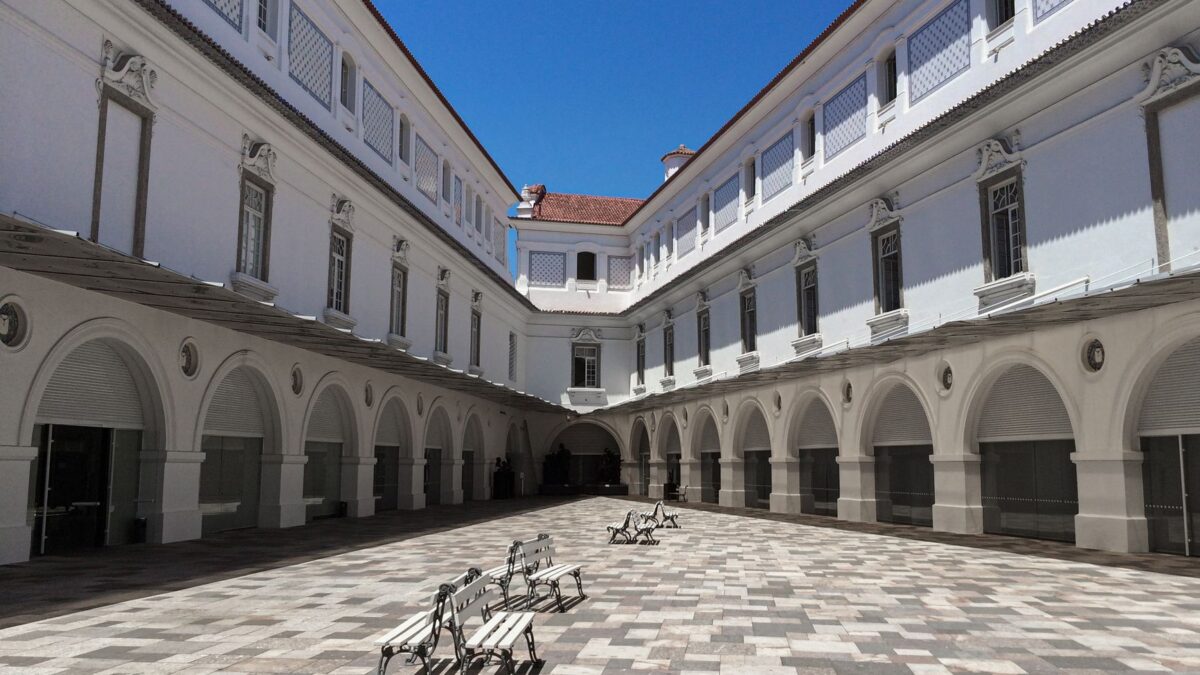
Centro Histórico has several small museums you can get through in about an hour: a printmaking museum on Plaza de la Santa Veracruz, an architecture museum on the top floor of Palacio de Bellas Artes, a museum on the sculptor Manuel Tolsá, an art collection in the old archbishop’s palace, an experimental art space in a former convent, and the city’s own history museum south of the Zócalo. Most open Tuesday through Sunday, so plan around Mondays.
The list runs roughly west to east, from Avenida Hidalgo toward the Zócalo, so you can link two or three in one walk. For the larger sights nearby, see our guide to landmarks in Centro Histórico.
Museo Nacional de la Estampa (MUNAE), Plaza de la Santa Veracruz
The Museo Nacional de la Estampa (National Printmaking Museum) collects and shows prints, engravings, original printing plates and editions by Mexican and foreign artists, mostly from the 20th and 21st centuries. It belongs to the museum network of INBAL (Mexico’s National Institute of Fine Arts and Literature) and opened on Dec. 17, 1986. The city’s tourism page for MUNAE puts the collection at more than 12,500 works in one place and more than 12,000 in another, so the exact count depends on which figure you read. The museum has put on some 350 temporary and traveling shows, and it also runs workshops, concerts and guided tours.
The 19th-century building stands on land that once belonged to the Santa Veracruz parish, and part of the site was a cemetery before that. Three other buildings face the same plaza: the Franz Mayer Museum, the temple of San Juan de Dios and the Church of Santa Veracruz, so you can take in the whole square after your visit. Print lovers and anyone curious about how an image gets onto paper will get the most out of it.
Address: 39 Hidalgo Avenue, on Plaza de la Santa Veracruz. Hours: Tuesday through Sunday, 10 a.m. to 6 p.m.
Museo Nacional de Arquitectura, Palacio de Bellas Artes
This museum takes up the top floor of Palacio de Bellas Artes. It has four sections, and the visit ends with rooms on the old National Theater and on Bellas Artes itself, the building that replaced it. Shows usually center on well-known Mexican architects and use models, design drawings and photographs. Temporary exhibitions lean toward 20th-century and contemporary architecture, with some on urban planning down to the scale of a single street.
Many people visit it together with the main Bellas Artes museum. MUNAE and the Franz Mayer Museum are a short walk away on Avenida Hidalgo, and the city’s page on the National Museum of Architecture says special events go up on the museum’s Facebook page.
Hours: Monday through Sunday, 10 a.m. to 6 p.m. Getting there: inside Palacio de Bellas Artes, on the top floor.
Museo Manuel Tolsá, Palacio de Minería
Manuel Tolsá was the architect and sculptor of Palacio de Minería (the Palace of Mining), and the museum about his work sits inside that building. It opened in 1999. On display are his sculptures, plans, ornamental pieces and models of his main civil works, next to pieces by his students and by other teachers of the colonial-era academy. There is also a portrait of Tolsá by the Valencian painter Rafael Ximeno y Planes, who directed painting at the Royal Academy of San Carlos.
It suits visitors who want a short introduction to the palace before or after walking its courtyards. The Manuel Tolsá Museum page lists a late-opening night once a month.
Hours: Wednesday through Sunday, 10 a.m. to 6 p.m.; on Museum Night, the final Wednesday of each month, 10 a.m. to 10 p.m. Tickets: mx$20.
Museo de Arte de la SHCP, Antiguo Palacio del Arzobispado
The art museum of the SHCP (Mexico’s finance ministry) shows works that artists handed over to pay their taxes through a “payment in kind” program. The result mixes paintings, sculpture and prints with furniture, applied arts, metalwork and coins. Names in the permanent collection include Juan Correa, Rufino Tamayo, Federico Cantú, Antonio Ruiz, Adolfo Best Maugard and Raúl Anguiano, and David Alfaro Siqueiros backed the program.
The building was the archbishop’s palace, home to some 33 bishops. It was rebuilt in the mid-18th century, with a monumental facade by José Miguel de Rivera Sarabia, and nationalized in 1859. Federal finance offices moved in later. The SHCP Museum of Art page has more on its history. Come for the 18th-century palace as much as for the art.
Hours: Tuesday through Sunday, 10 a.m. to 5 p.m. Note the earlier closing time.
Ex Teresa Arte Actual, Santa Teresa la Antigua
Ex Teresa Arte Actual is a contemporary art space in the former church and Carmelite monastery of Santa Teresa la Antigua. Its program centers on installation, performance, sound art, video and multimedia, plus contemporary music concerts and film screenings. A documentation center keeps an audiovisual and photographic archive.
The 17th-century complex is mostly the work of architect Cristóbal de Medina Vargas (1635 to 1699). The main entrance has twisted Solomonic columns, and the dome was added by Lorenzo de la Hidalga in the mid-19th century. The main nave and chapels survive, including the Chapel of Christ of Santa Teresa. According to the Ex Teresa Arte Actual page, the neighboring Palace of University Autonomy has some of the best views of the complex. Pick this one if you like experimental work or want to see a baroque interior used in a new way.
Hours: Tuesday through Sunday, 10 a.m. to 6 p.m.
Museo de la Ciudad de México, south of the Zócalo
The Museo de la Ciudad de México (Museum of Mexico City) is a few blocks south of the Zócalo, in the former palace of the Counts of Santiago de Calimaya. Its 26 galleries follow the city from Mexico-Tenochtitlan to the present, split into pre-Hispanic, colonial, 19th-century and 20th-century periods, with codices, maps, furniture, glassware, pottery, paintings and photographs. The building also keeps part of the studio and music room of painter Joaquín Clausell, who lived there at the turn of the 20th century, and the Jaime Torres Bodet library of some 10,000 volumes.
Architect Francisco Antonio de Guerrero y Torres finished the palace in 1779. The city bought it in 1960, the museum opened in 1964 and it was reorganized in 1997. The Museum of the City of Mexico page mentions frequent temporary shows, a gallery on the Valley of Mexico’s rivers, a bookstore, guided tours and programs for children. It works well for newcomers who want the city’s history in one building.
Hours: Tuesday through Sunday, 10 a.m. to 6 p.m. Getting there: a few blocks south of the Zócalo.
Tips for visiting
- Avoid Monday. Five of the six close that day; only the architecture museum in Bellas Artes lists Monday hours.
- The Manuel Tolsá Museum also closes on Tuesday, opening Wednesday through Sunday.
- Go to the SHCP museum before 5 p.m., an hour earlier than the others.
- Group by area: MUNAE, the Franz Mayer Museum and the architecture museum sit close together around Avenida Hidalgo, while the SHCP museum, Ex Teresa and the Museo de la Ciudad are on the Zócalo side.
- Only the Tolsá museum lists a ticket price on its city page. Check the others on arrival.
For bigger collections, compare our guide to Mexico City’s art museums, and for the buildings themselves see historic palaces in Mexico City.
Quick answers
Which small museum in Centro Histórico is open on Monday?
The Museo Nacional de Arquitectura in Palacio de Bellas Artes lists hours from Monday through Sunday, 10 a.m. to 6 p.m. The other five on this list close on Monday.
Is there a late night at any of these museums?
Yes. The Manuel Tolsá Museum stays open until 10 p.m. on Museum Night, the final Wednesday of each month.
Which one gives the best overview of the city’s history?
The Museo de la Ciudad de México, whose 26 galleries run from Mexico-Tenochtitlan to the 20th century.
Where can I see contemporary or experimental art in the center?
Ex Teresa Arte Actual shows installation, performance, sound and video art in a former 17th-century convent.
Checked against official sources in November 2026. Hours, prices and rules change: confirm on the official page before you go or apply.