National Museum of Anthropology Mexico City: Hours and Tips
The National Museum of Anthropology in Mexico City is open Tuesday to Sunday, 9:00 to 17:00. See what is inside, how to get there and what to check first.
The Museo Nacional de Antropología (MNA, Mexico’s National Museum of Anthropology) is open Tuesday to Sunday from 9:00 to 17:00. It stands inside Chapultepec Park, between Paseo de la Reforma and Mahatma Gandhi Street, and holds archaeological and anthropological pieces from Mexico’s pre-Columbian cultures, among them the Piedra del Sol (the Stone of the Sun, often called the Aztec calendar stone).
Admission prices are not covered here, so confirm the current fare and any free-entry rules with the museum before you go. The museum is managed by the Instituto Nacional de Antropología e Historia (INAH, the national institute of anthropology and history).
Why people visit the Museo Nacional de Antropología
The Mexico City tourism site describes it as the most frequented museum in the country and a standard stop for visitors from around the world. Wikipedia gives a figure: 3,700,000 visitors in 2024, which it says makes the MNA the most visited museum in Mexico and the 17th most visited art museum in the world.
Visitors come for the pieces from ancient Mexican civilizations, and also for the building itself. The architecture has won awards, and the courtyard is one of the best-known spaces in the city.
Background: how the museum came to be
Between 1940 and 1960, an intellectual movement in Mexico worked toward a national identity built on the dignity of Indigenous heritage, which had long been looked down on. People in that movement wanted one large museum that would bring the Indigenous legacy together, especially what archaeology had recovered.
The administration of President Adolfo López Mateos started the planning. The architect Pedro Ramírez Vázquez directed the work, and the building went up in 1963 and 1964. According to Wikipedia, he designed it with Jorge Campuzano and Rafael Mijares Alcérreca, and the museum opened in 1964 along with several others inaugurated by the same president.
The collection itself is older. It dates to 1790, when workers found the Piedra del Sol at the base of the Catedral Metropolitana. In the following years other major pieces came to light again: monumental sculptures of Coatlicue, the Piedra Tizoc and the huge head of Xiuhcóatl, the fire serpent. Those finds raised interest in protecting this heritage.
What to see inside the museum
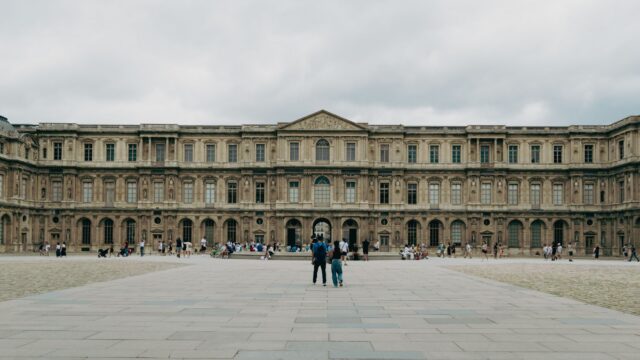
The center of the complex is the open courtyard, with a large pond and a vast square concrete roof held up by one slender pillar. The roof is known as “el paraguas” (the umbrella), and it is the main focus of the patio. Its design follows the open forums of Maya ceremonial centers, and the decoration on the facade is allegorical, with references to pre-Hispanic symbols such as the serpent and the snail.
The museum is split into two large sections. The Anthropology section fills the ground floor, and its eleven galleries open directly onto the central courtyard. Wikipedia adds that the upper floor groups ethnography, showing how Indigenous peoples live. In all, the building has 23 rooms for exhibits and covers 79,700 square meters, and the halls are ringed by gardens, some with outdoor exhibits. Wikipedia lists the collection at 600,000 pieces.
The Piedra del Sol dominates the central hall. It is the large calendar stone recovered from the ruins of Tenochtitlan. The largest exhibition hall is the Mexica Room, which connects to the courtyard pool. Wikipedia also mentions the Xochipilli statue among the Aztec pieces on display.
The weight given to the Mexica Room has drawn criticism. Octavio Paz argued that glorifying Mexico-Tenochtitlan turned the museum into a temple. Other assessments cited by Wikipedia call it a national treasure and a symbol of identity.
Practical information
Address: inside Chapultepec Park, in the area between Paseo de la Reforma and Mahatma Gandhi Street, Mexico City. Hours: Tuesday to Sunday, 9:00 to 17:00. Monday is not listed, so check before planning a visit that day. Tickets: check the current price with the museum or INAH. Getting there: the nearest Metro CDMX (Mexico City’s subway) stop is Auditorio, on Line 7. The Circuito Centro Histórico route of the Turibús (the city’s tourist bus) stops on Paseo de la Reforma at the corner with Avenida Grutas, and the Monolito de Tláloc is easy to see from that part of Reforma.
Tips for visiting
Plan around the opening hours. The museum closes at 17:00, and 23 rooms plus the gardens take time to cover.
The museum sits in a park with other places worth a stop. The Castillo de Chapultepec (Chapultepec Castle) is among the park’s main sites and one of the highest points you can visit. The Zoológico de Chapultepec is popular with children, the park’s lake is one of several bodies of water, and the Museo del Caracol is a museum on the history of the city.
INAH museums have free-entry days for some visitors. Our guide to free museum days in Mexico City explains the Sunday rule and who qualifies, though you should confirm that it applies to this museum. If the pre-Hispanic material makes you want to see a site in person, visiting Teotihuacan from Mexico City covers hours, tickets and buses.
Quick answers
What are the opening hours?
Tuesday to Sunday from 9:00 to 17:00, according to the Mexico City tourism site.
Which Metro station is closest?
Wikipedia lists Auditorio station on Line 7 as the public transit access point.
Who runs the museum?
INAH, the Instituto Nacional de Antropología e Historia, manages it along with many other national and regional museums.
How big is the museum?
It has 23 exhibition rooms and covers 79,700 square meters, according to Wikipedia.
Checked against official sources in November 2026. Hours, prices and rules change: confirm on the official page before you go or apply.