Templo Mayor in Mexico City: What to See at the Aztec Ruins and Museum
Templo Mayor was the Mexica capital's main temple. Here is what the ruins and museum show, how the site was found in 1978, and what to check before you go.
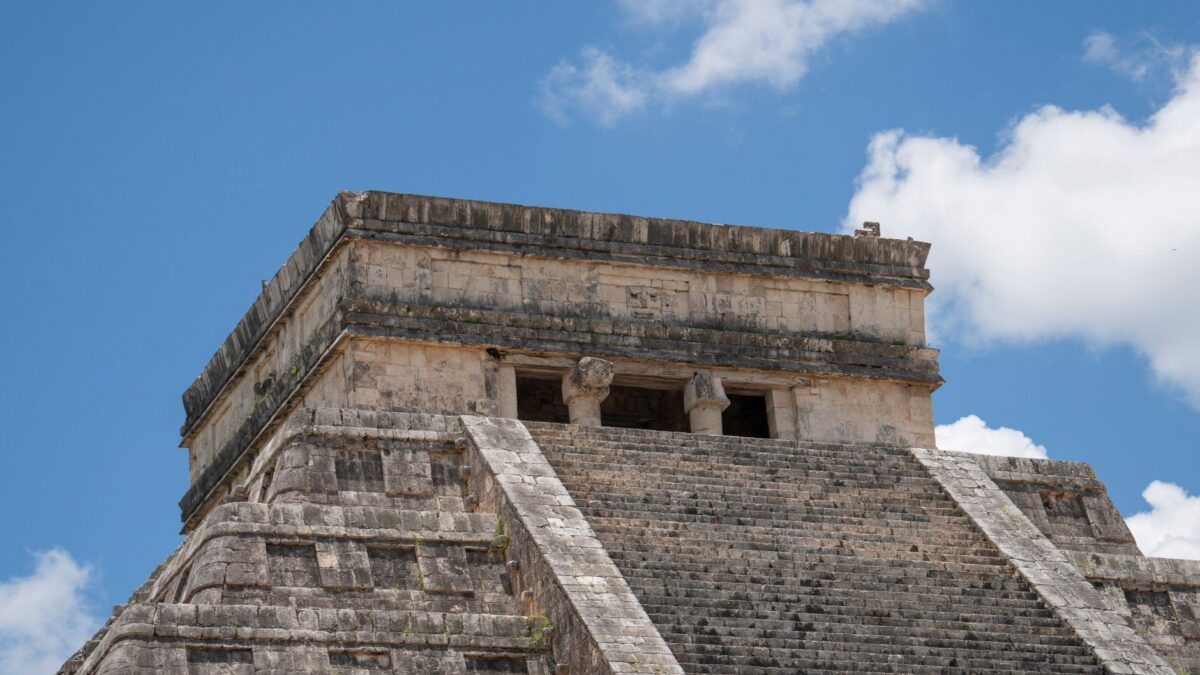
Templo Mayor is the ruin of the main temple of the Mexica (Aztec) capital, Tenochtitlan, and it sits next to the Metropolitan Cathedral in the historic center of Mexico City. The site has an excavated temple complex and a museum that, according to Mexico City’s official tourism site, presents more than 3,000 artifacts of Mexica culture. Visitors who go to the Museo Nacional de Antropología expecting the Great Temple will not find it there; this is where it is.
What Templo Mayor was
The city tourism site describes the temple as the most important one in Mexico-Tenochtitlan and the center of the political and religious life of Mexica society. It ended in two shrines: one for Tláloc, the god of water, and one for Huitzilopochtli, the god of war. The wider complex also had the House of the Eagles, a temple to the god Ehécatl, the Huey Tzompanli, a ball court and the Calmécac.
According to Wikipedia, the Mexica called it Huēyi Teōcalli, which means “great house of god” in Nahuatl, and treated it as the center of the universe. Its base measured roughly 100 by 80 m (328 by 262 ft).
How the ruins were found
Construction began sometime after 1325, and the temple was rebuilt six times, each new stage built over the last. The Spanish almost completely destroyed it in 1521 and built the cathedral nearby. Houses later went up over the ruins, and its exact location was forgotten.
Manuel Gamio found part of the southwest corner in the early 20th century. The big breakthrough came on Feb. 21, 1978, when workers for the Comisión Federal de Electricidad (CFE, the city’s electricity provider) hit a huge carved stone disk just over two meters down. It was later identified as the monolith of Coyolxauhqui, Huitzilopochtli’s sister, and dates from the end of the 15th century. Archaeologist Eduardo Matos Moctezuma led excavations from 1978 to 1982. Crews demolished 13 buildings in the area to finish the dig, and they found more than 7,000 objects, mostly offerings.
What to see
The site has two parts: the exposed temple, labeled to show its stages of construction along with nearby buildings, and the museum, which holds the smaller and more fragile finds. The museum building was designed by architect Pedro Ramírez Vázquez. For another major museum in the capital, see our guide to the National Museum of Anthropology.
- The Coyolxauhqui monolith, one of the two best-known pieces, along with the monolith of the goddess Tlaltecuhtli.
- Offerings, burials and objects from the colonial period, according to the city tourism site.
- Offerings from the dig that include clay pots in the image of Tláloc, snail shells, coral, gold, copper rattles, and obsidian and flint knives.
- The remains of the earlier temple stages. The first stage is known only from written records because the high water table of the old lakebed prevents digging there.
Where it is and how to get there
Templo Mayor is on the block between Seminario and Justo Sierra streets, northeast of the Zócalo, the city’s main plaza. It is part of the Historic Center of Mexico City, which UNESCO added to its World Heritage List in 1987. The tourism site places it on a walking route that runs between the Metropolitan Cathedral and the National Palace, so it is easy to combine with the Zócalo. According to Wikipedia, it had 801,942 visitors in 2017.
Hours and tickets
The sources used for this guide do not give opening hours, closing days or ticket prices. Check them on the museum’s official page before you go. Sundays can be free for some visitors at INAH museums; see our guide to free museum days in Mexico City to find out who qualifies.
Tips for visiting
- Pair it with the Zócalo, the cathedral and the National Palace, which all sit within a few minutes’ walk.
- Look at the temple stages first, then the museum, to see how the stages of construction relate to the objects found in them.
- For another big pre-Hispanic site, see visiting Teotihuacan from Mexico City.
Quick answers
Is Templo Mayor the same as the Museo Nacional de Antropología?
No. The Museo Nacional de Antropología covers all of the cultures of Mexico. Templo Mayor focuses on Mexico-Tenochtitlan, the center of the Mexica empire.
Which gods was the temple built for?
The two shrines at the top were for Huitzilopochtli, the god of war, and Tláloc, the god of water. Wikipedia adds that the central spire was devoted to Quetzalcóatl in his form as the wind god, Ehécatl.
Why is the site at ground level and not a standing pyramid?
The Spanish dismantled the temple after the conquest and used its materials for the colonial city. What visitors see today is what archaeologists excavated from 1978 to 1982.
Checked against official sources in November 2026. Hours, prices and rules change: confirm on the official page before you go or apply.