Xochimilco Trajinera Prices: Official Rate, Piers and Getting There
A trajinera is rented by the boat and the hour, not per person. The official rate, what it covers, the difference between Nativitas and Cuemanco, and the light rail route from Tasqueña.
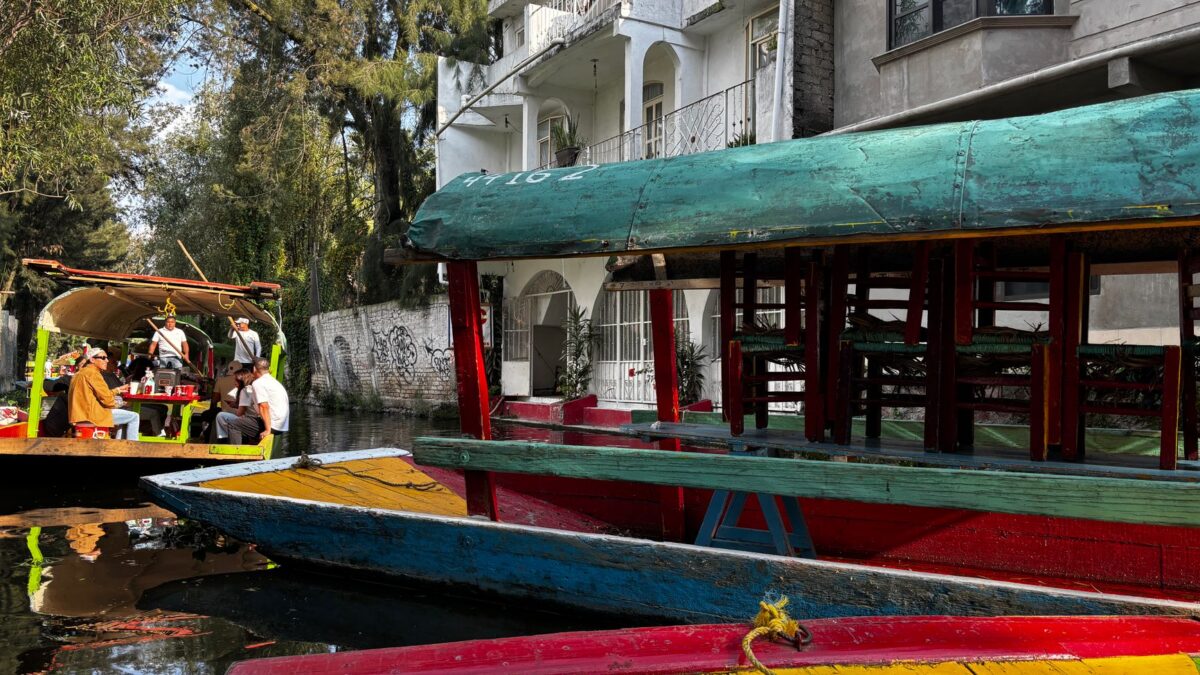
A trajinera ride in Xochimilco costs MXN 750 per boat per hour, the official price listed by the Xochimilco borough government (alcaldía), with up to 18 passengers per boat. The price is per boat, not per person, and the borough says it applies at its piers for both the tourist and the ecological routes. The 10 piers are open every day of the year.
How much does a trajinera cost?
The Xochimilco borough’s tourism page gives the official price as MXN 750 per hour of ride, with a maximum of 18 people per trajinera, as of November 2026. The page does not give a separate rate for weekends or holidays.
| Group size | 1 hour | 2 hours | Per person, 2 hours |
|---|---|---|---|
| 4 people | MXN 750 | MXN 1,500 | MXN 375 |
| 8 people | MXN 750 | MXN 1,500 | MXN 187.50 |
| 18 people (maximum) | MXN 750 | MXN 1,500 | About MXN 83 |
The per-person figures are our arithmetic from the official hourly rate. Larger groups pay the same for the boat, so the trip gets cheaper per head as the group grows.
What does the official price cover?
The price covers the boat and the boatman (remero) for the time you pay. It does not include food, drinks, mariachis, marimba bands or photos. These are sold separately by vendors along the canals, each with its own price. Ask the price before you accept a song or a plate.
Groups larger than 18 need a second boat, and each boat is charged separately at the hourly rate.
Agree on three points before boarding: the number of hours, the total, and the route. A ticket or receipt from the pier office helps if there is a dispute later. If the quote is higher than the official rate, ask what it includes.
Which embarcadero should you choose?
The borough describes two kinds of piers (embarcaderos). The traditional ones near the center of Xochimilco are busy, festive and close to markets and restaurants. The ecological ones lead into the protected natural area, which is quieter and better for birds and chinampas.
| Type | Piers named by the borough | What to expect |
|---|---|---|
| Traditional | Nativitas, Zacapa, Las Flores Nativitas | Large facilities, parking, craft markets, restaurants, more boats and music |
| Ecological | Fernando Celada, Cuemanco, Puente de Urrutia | Canals in the protected natural zone, migratory and native birds, calmer water |
| Central | Belem and Belem de las Flores (listed in the city’s tourism guide) | Easy to reach from the center of Xochimilco |
Cuemanco is one of the largest piers and is also the base for the ecological tours. Nativitas has a crafts market with wood, ceramics, papier-mâché, copper and basketry from local producers. The borough counts about 184 kilometers of waterways in Xochimilco, and the chinampas, the hand-built farm plots between the canals, are part of a UNESCO World Heritage site.
How do you get to Xochimilco by Tren Ligero?
The light rail (Tren Ligero) runs from Tasqueña, where it connects with Metro Line 2, to Xochimilco station on a single line with 18 stations. According to the city’s official tourism guide, a ride costs MXN 3 as of November 2026, paid only with the Integrated Mobility Card (MI) at the turnstiles. The card costs MXN 15 at the machines at every station, which take coins, notes and bank cards.
- Take Metro Line 2 to Tasqueña.
- Change to the Tren Ligero and ride to the last stop, Xochimilco.
- From the station, the city guide notes the trajinera piers are a short distance away; ask locally or use a map app for the pier you chose.
- For Cuemanco and the ecological piers, check the route on a map app before you go, since they are farther from the last light rail stop.
The same card works on the Metro and Metrobús; our guide to the Metro fare and Integrated Mobility Card explains top-ups. On match days at the Mexico City Stadium, the Estadio Azteca station on the same line has special operations, so allow extra time.
When is the best time to go?
The piers open all year, but weekends and holidays bring the most boats and the most music. Weekdays are usually calmer, and the ecological piers are quieter at any time.
Check the city’s public holiday calendar before you pick a date, since holidays bring larger crowds to the canals.
Bottom line
Go with a group, agree on hours and the MXN 750 hourly boat rate at the pier office, and pay vendors separately for music and food. Pick Nativitas for the festive canals or Cuemanco and the other ecological piers for a quiet ride, and load your mobility card for the Tren Ligero from Tasqueña.
FAQ
Is the trajinera price per person?
No. The official rate is per boat and per hour, MXN 750 as of November 2026, for up to 18 people. Splitting it among a group lowers the cost per person.
Are the embarcaderos open every day?
Yes. The Xochimilco borough says its 10 piers are open 365 days a year.
Can I pay the Tren Ligero in cash?
No. The city’s tourism guide says access is only with the Integrated Mobility Card, which you can buy and top up with cash at station machines.
Are food and music included in the boat price?
No. Vendors in other boats sell food, drinks and songs, each at its own price. Ask first and pay them directly.